
Green Light Erases Cellulite

Updated: Sep 6
LED green is better than botox for skin tone

Summary
Cellulite is a common and unwanted appearance of subcutaneous fat associated with weaknesses in skin collagen -- i.e., the connective tissues that keeps skin taut.
Collagen is produced by specialized cells in the dermal layer of the skin called fibroblasts.
Green light penetrates the skin to the depth of the fibroblasts, where it promotes generation of new cells.
One clinical trial showed that exposure to low-level green laser light stimulated production of new fibroblasts, reduced thigh diameter and erased the appearance of cellulite.
Cellulite: A Normal Disorder?
90% of adult American women have cellulite -- lumpy, dimpled flesh, most often on the thighs, hips, and buttocks. It is so common that medical texts disagree on whether to describe it as a disorder. Dermatologists will sometimes invent more sophisticated diagnostic terms that encourage women to seek surgical or cream-based treatments, but other physicians discourage use of these diagnostic terms, perhaps because the available treatments are so limited in their efficacy.
The only consensus regarding the cause of cellulite is that it is associated with a depleted condition in the connective tissue that anchor the skin to the muscle fascia. When the septae are weak, dimpling on the skin becomes visible as subcutaneous fat pushes up between these anchor points. When septae is strong, it is more effective for containing subcutaneous fat and maintaining a smooth skin appearance.
Septae is made primarily of collagen, a complex protein that gives skin it's structural strength. Collagen is the principal structural building block in bones, ligaments, and tendons, but in the skin collagen is produced by specialized cells called fibroblasts residing in the dermis.
Green Light for Collagen
Skin is especially sensitive to light exposure, and different wavelengths of light have different effects. For example, UVB exposure stimulates activity in melanocytes, increasing pigment in the epidermis (outermost layer of the skin) and causes the skin to tan. By contrast, longer wavelengths like 730nm red/nearinfrared (NIR) penetrate to deeper layers and can stimulate stem cells in dormant hair follicles, helping to regrow hair.
Green light penetrates just below the epidermis, to the dermis that house fibroblasts. That fact might scientists to believe that green light is ideal for stimulating collagen production.
To test this hypothesis, a team of scientists in Belguim isolated fibroblasts from chicken eggs, cultured the in the lab, and compared their response to several different light environments including green (570 nm), red (660 nm), and NIR (950 nm). They discovered that all wavelengths increased proliferation in the fibroblast cultures, and that "green LED light yielded a significantly higher number of cells than red (p < 0.001) and infrared LED light
(p < 0.001)" (Vinck et al. 2003).

Because collagen is what gives skin it's elasticity and youthful appearance, the implication is that more green light will produce more fibroblasts, which produce more collagen, that will result in tighter, less wrinkled, younger-looking skin.
Despite the promise of these results, the Belgian findings went largely unnoticed for several years and have been overlooked in subsequent cellulite therapy research. A full decade passed before a different group of researchers in the United States undertook a green light study for cellulite therapy, and they presumably were ignorant of the Belgian findings, because they didn't bother to cite the previous work. These researchers used low-level-laser therapy (LLLT) in green wavelengths, rather than LED, and their results were even more impressive.
In just two weeks of 532nm green LLLT treatment, the experimental group of women between 18-55 years old experienced a reduction in circumference of their thighs averaging two inches (Jackson et al. 2013).
Moreover, these women noticed an improvement in their skin appearance that resulted from a reduction of cellulite in the treated areas.

"The results of this study indicate LLLT using a green 532 nm diode is an effective stand-alone method for improving the appearance of cellulite. "While the exact mechanism remains unknown... we propose that the use of 532 nm light may induce skin tightening by stimulating the synthesis of new collagen" - Jackson et al (2013).
Without the benefit of the previous Belgian research, the American group could only speculate that the thigh reduction and erasure of cellulite resulted from improved collagen production in fibroblast cells stimulated by the green light. They reasoned that stronger collagen was doing a better job containing the subcutaneous fat, reducing dimpling, smoothing the skin, and shrinking the thighs.
If these scientists are correct, there's no reason to expect that the collagen benefits of green light therapy would be confined exclusively to cellulite. They would also confer to other areas of skin that women want to appear more taut and youthful... like the face.
MyGreen Lamp is LED Green
MyGreen Lamp has never been tested for collagen production. Although the lab results suggest that the wavelengths in MyGreen (530nm and 545nm) would stimulate proliferation of fibroblasts and increase skin collagen, I never recommended MyGreen as a skin treatment. I've always focused on the way that MyGreen will reduce pain -- especially migraine headache pain.
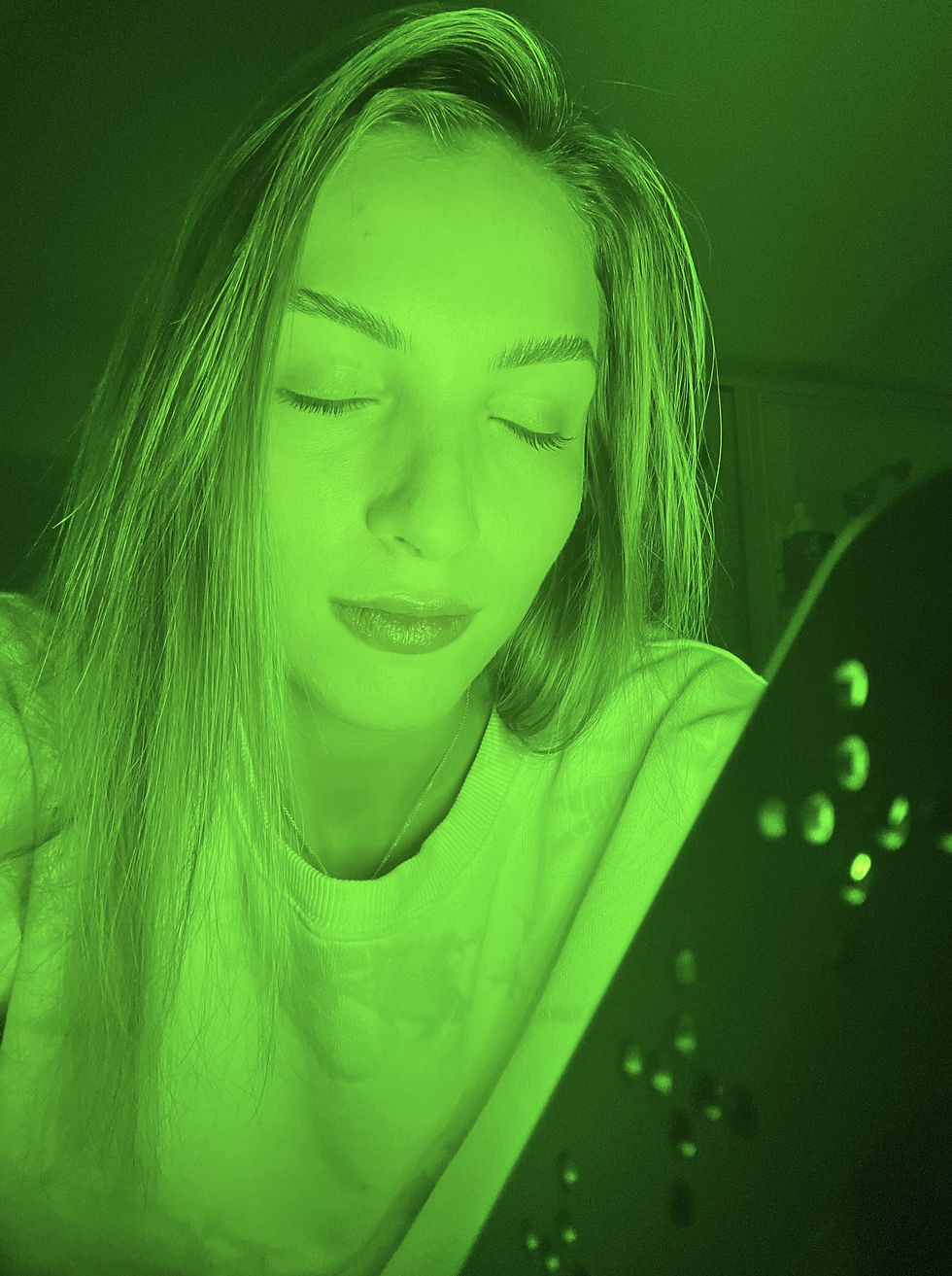
Nevertheless, the findings of these two, independent studies, raises the possibility that using the MyGreen Lamp on the face to prevent migraines might also improve skin tone and erase wrinkles by promoting new collagen production.
Ironically, one of the most popular migraine headache treatments available is to inject botox into muscle groups in the head, neck and shoulders. These injection sites are different from those that reduce facial skin wrinkles, but we can't ignore the fact that botox is used both to improve the appearance of skin and to prevent migraines -- just like green light.
This positions botox and green light therapy in direct competition with each other for the same indications. Clinical studies show that they both reduce the severity and frequency of migraine headaches, and that they both improve skin tone and appearance. But they work through different mechanisms. Botox paralyzes the skin and numbs nerve transmission. Green light stimulates proliferation of fibroblasts, produce more collagen, erase wrinkles, improve skin tone, and recaptures youthful appearance by healing skin lesions and promoting growth of new cells.
References
Jackson RF, Roche GC, Shanks SC. A double‐blind, placebo‐controlled randomized trial evaluating the ability of low‐level laser therapy to improve the appearance of cellulite. Lasers in Surgery and Medicine. 2013 Mar;45(3):141-7.
Vinck EM, Cagnie BJ, Cornelissen MJ, Declercq HA, Cambier DC. Increased fibroblast proliferation induced by light emitting diode and low power laser irradiation. Lasers in medical science. 2003 May;18(2):95-9.
About the Author
Thomas P Seager, PhD is an Associate Professor in the School of Sustainable Engineering at Arizona State University. He is the founder of MyGreen Lamp, LLC and principal inventor of MyGreen products, and CEO of the Morozko Forge ice bath company.


Comments